Our Research

The alliance seeks to undertake the research that is most urgently needed. Additional project lines will be developed as the alliance builds, however three projects are already underway and include:

1. An ocean-wide synthesis of available evidence of leatherback bycatch

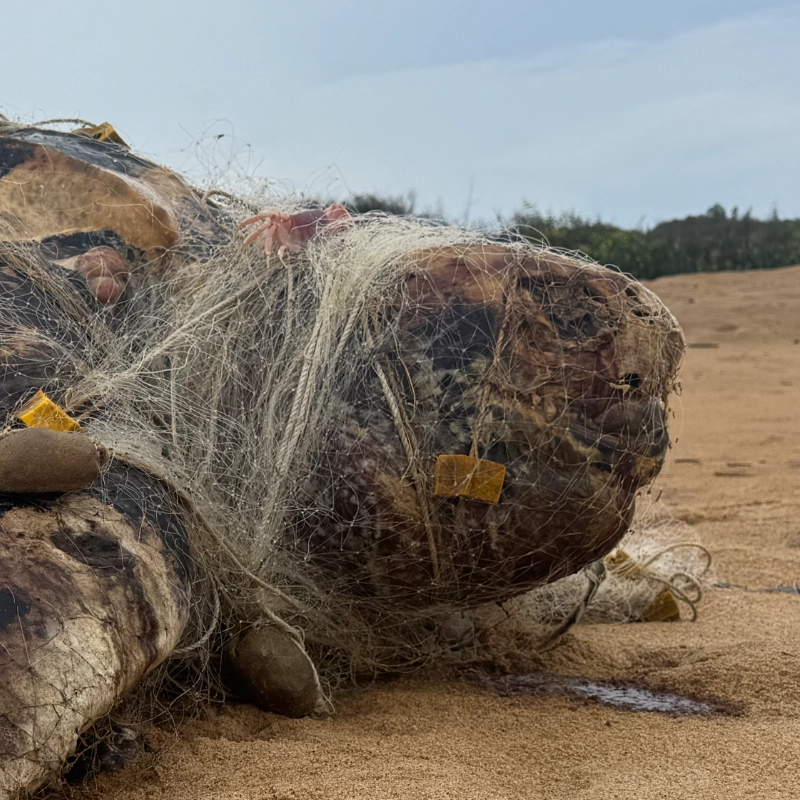
An Atlantic-wide perspective is essential because leatherbacks migrate across vast ocean areas and interact with numerous fisheries across multiple jurisdictions. Without coordinated assessment, conservation responses remain fragmented and reactive. This project will compile all available data on Atlantic leatherback bycatch through an extensive review of peer-reviewed and grey literature (documents produced by governments, universities, companies, NGOs), including sources in French, Spanish, and Portuguese to capture underrepresented regional evidence. This research will be strengthened through expert interviews with fisheries specialists and turtle conservation practitioners across range states. A comprehensive basin-wide assessment will identify major bycatch hotspots, most vulnerable populations, and support the design of targeted conservation measures.
2. Updating the Nesting Population Assessment for Gabon

In the Atlantic, the leatherback turtle (Dermochelys coriacea) is listed as globally Vulnerable on the IUCN Red List of Threatened Species. In 2013, regional sub-populations were assessed for the first time and the three Regional Management Units (RMUs) in the Atlantic Ocean are currently listed as follows:

  1. NW Atlantic Endangered, moving from Least Concern in 2019, based on a 2017 assessment showing declines, particularly in French Guiana.
  2. SW Atlantic: Critically Endangered, last updated in 2013.
  3. SE Atlantic: Data Deficient, last updated in 2013.

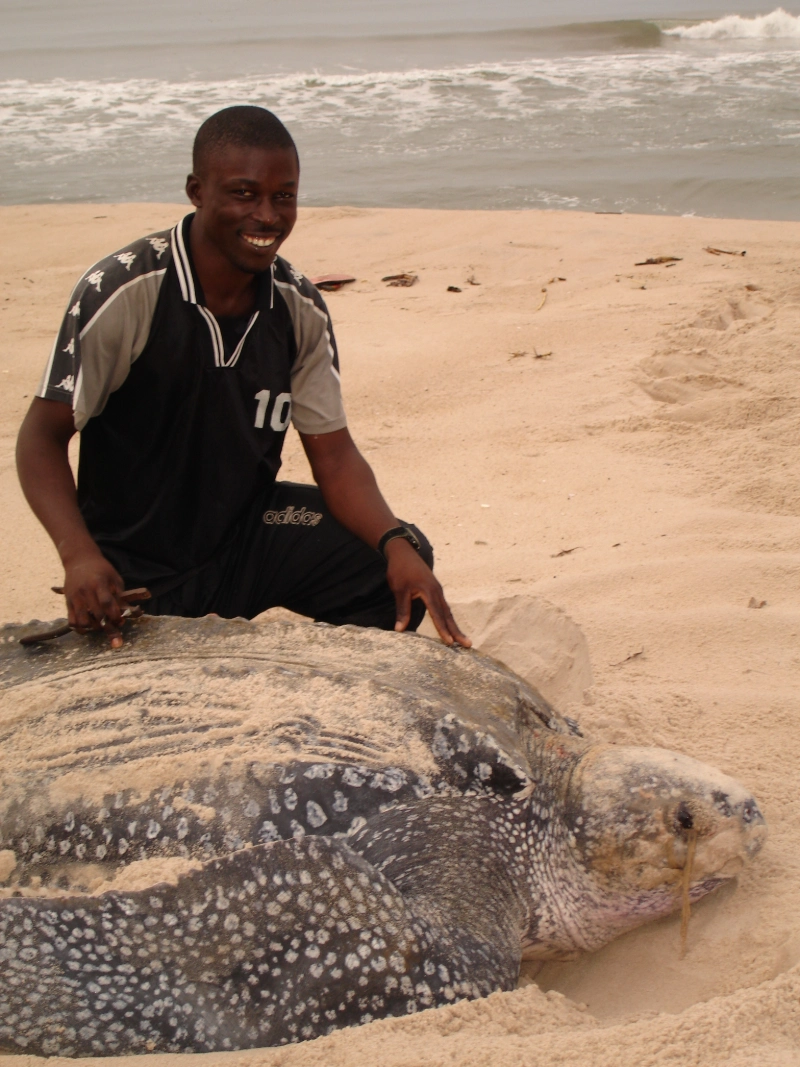
An updated assessment of Atlantic leatherback turtle nesting populations is urgently needed to understand current population trends and guide effective conservation action. This work begins in Gabon because it hosts the world’s largest known Atlantic leatherback nesting population, providing the strongest available baseline for assessing the species at scale. This work is undertaken in collaboration with the Paterneriat,

3. Understanding Leatherback Movements in the Southwest Atlantic to Guide Conservation

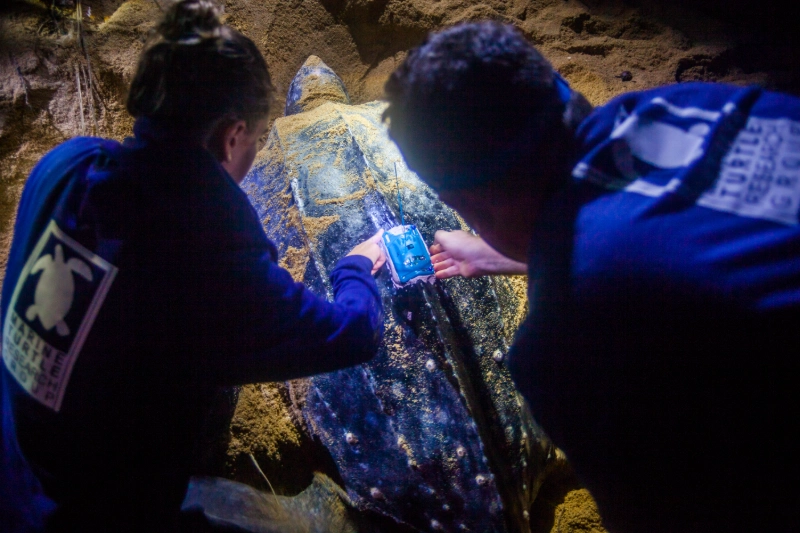
We are collaborating on a project led by Fundação Projeto TAMAR in partnership with Centro TAMAR/ICMBio. This study is urgently needed because the Southwestern Atlantic leatherback turtle population is currently classified as Critically Endangered, due to being genetically distinct, geographically restricted and extremely small. Effective protection depends on understanding in-water habitat use during the nesting season, and where turtles travel after nesting, including which habitats they depend on, and which regions and anthropogenic activities pose the greatest risks. By combining satellite tracking with stable isotope analysis, this research provides a more complete picture of migratory routes, foraging areas, and habitat use than either method alone. It can reveal whether turtles forage in coastal or oceanic environments, identify key feeding grounds, and determine how different parts of the population are exposed to varying conservation threats. These insights are essential for improving existing marine protected areas and proposing new ones, reducing fisheries bycatch, and informing coordinated conservation policies across national waters and the High Seas. Understanding migratory connectivity is critical to ensuring that conservation measures protect turtles throughout their life cycle, not just on nesting beaches. This work will provide the evidence needed to secure the future of one of the Atlantic’s most vulnerable leatherback populations.